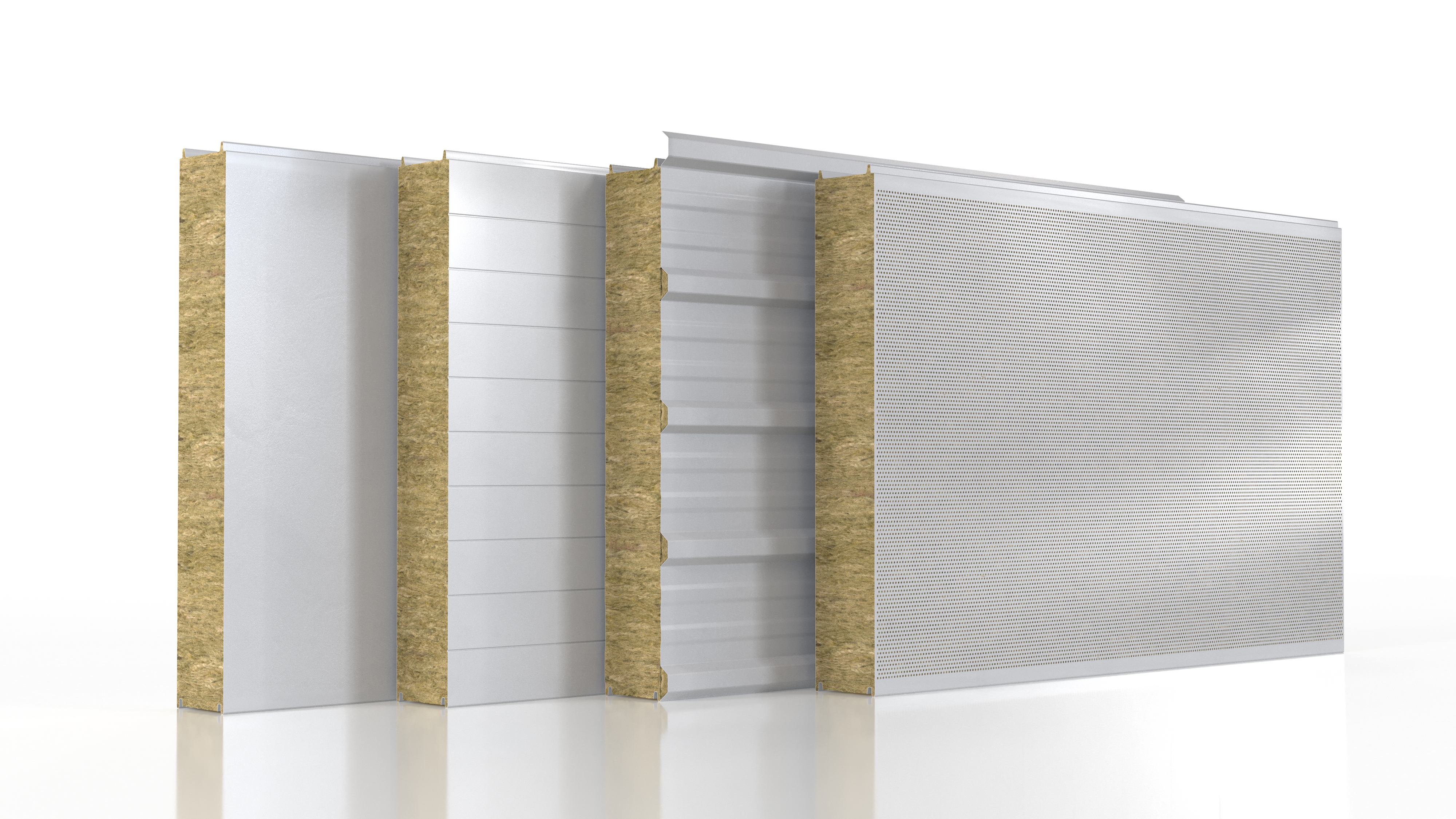
Manni Group, one of Europe’s leading steel service centres, has partnered with ROCKWOOL Core Solutions and Isopan to build a new warehouse that sets a benchmark for low-carbon construction.
Located in the province of Verona, the 13,800 m² facility is designed to store long steel products for Manni Sipre. Beyond its functional role, the project reflects a deeper commitment to sustainability: integrating low-carbon materials, efficient construction practices, and collaborative innovation to demonstrate the future of industrial architecture.
The race to decarbonise: a shared challenge
In the race to decarbonise the built environment, industrial buildings present a significant and often overlooked opportunity for emissions reduction. This concerns both Scope 3 emissions – embodied via the carbon intensity of selected materials and technologies – and Scope 2 emissions, dependent on energy and resource efficiency.
With buildings accounting for 39% of global energy-related carbon emissions (28% from operational Scope 2 and 11% from Scope 3), the challenge is immense. Furthermore, around 75% of EU buildings are currently energy inefficient, yet most will remain in use by 2050. Consequently, improving energy performance in new builds like this facility is essential to meeting climate goals and achieving green building certifications such as BREEAM.
The construction sector faces mounting pressure to reduce carbon emissions while maintaining productivity and building performance. One essential strategy is the use of high-quality insulation to cut energy demand for heating and cooling.
Driven by end-user expectations and upcoming regulations such as the Corporate Sustainability Reporting Directive (CSRD), developers increasingly demand solutions that combine performance, durability, and reduced embodied carbon.
Stone wool clearly meets this challenge. Its naturally low thermal conductivity and low diffusivity minimise heat transfer across seasonal extremes – reducing summer heat gains during peak conditions and winter heat losses, helping buildings maintain stable indoor temperatures while reducing energy consumption. Non-combustible (Euroclass A1) and able to maintain its dimensions and shape over time, stone wool also resists moisture and mold, ensuring consistent and long-term acoustic, thermal and mechanical performances for industrial facilities of any size.

Manni Group Warehouse
Verona | Italy